
Ohio Dissolution Of Marriage Records
Ohio dissolution of marriage records are kept by the Clerk of Courts in each of the state's 88 counties. You can search for these records online through county court portals or visit a courthouse in person. The Court of Common Pleas handles all dissolution of marriage cases in Ohio, and the Domestic Relations Division maintains every filing from the first petition to the final decree. If you need to find a dissolution of marriage case or get a copy of the court order that ended a marriage, the county where the case was filed is the place to start. Some counties offer free online case searches while others require an in-person visit or a written request.
Ohio Dissolution Of Marriage Overview
Ohio Dissolution Of Marriage Sources
The Clerk of Courts in each Ohio county is the main source for dissolution of marriage records. Ohio has 88 counties, and each one has its own Court of Common Pleas with a Domestic Relations Division. That division keeps the full case file for every dissolution filed in the county. The file holds the joint petition, the separation agreement, financial disclosures, and the final decree. The Ohio Clerk of Courts Association maintains a directory of all 88 county clerks so you can find the right office fast.
The Ohio Department of Health, Bureau of Vital Statistics keeps an abstract index of divorces and dissolutions from January 1, 1954 to the present. An abstract is not the full decree. It lists basic facts like names, date, and county. The Bureau is at 4200 Surface Road, Columbus, OH 43228, and you can call 614-466-2531 for help. If you need the actual court documents, you have to go to the Clerk of Courts in the county where the case was filed.
For older dissolution of marriage records, the Ohio History Connection holds records that are more than 50 years old. Under Ohio Administrative Code 3701-5-11, divorce and dissolution abstracts can be transferred to the Ohio History Connection after 50 years. Their Archives and Library in Columbus has records from several Ohio counties, though the time periods vary.
Note: Ohio dissolution of marriage records are not held by the state health department. Certified copies of the actual decree can only come from the county Clerk of Courts where the case was filed.
Search Ohio Dissolution Of Marriage
Each Ohio county runs its own online case search system. There is no single statewide portal that covers all 88 counties at once. Some counties use CourtView, some use custom systems, and a few only have basic docket information online. The amount of detail you can see varies. Most systems let you search by party name, case number, or filing date. Some show full docket entries and document images. Others just confirm that a case exists.
The Franklin County Court of Common Pleas offers a Case Information Online system that covers domestic relations cases. You can look up dissolution of marriage filings by name or case number and see docket entries showing the full history of the case. The Cuyahoga County Clerk of Courts Public Access Portal provides a similar tool for cases in the Cleveland area. These are free to use and available around the clock.
The Franklin County Clerk of Courts website is a good example of what larger counties offer online. You can search case information, request copies of documents, and find contact details for the Domestic Relations Division. In Franklin County, the office is at 373 South High Street, Columbus, OH 43215, and the phone number is 614-525-3600. Not every county has this level of online access, so you may need to call or visit the clerk's office in smaller counties.
To search for a dissolution of marriage case, you will need:
- Full name of at least one spouse
- The county where the case was filed
- Approximate year of the filing if you have it
- Case number if it is known to you
The Franklin County Clerk of Courts handles dissolution of marriage records for residents in the Columbus area through their official website.
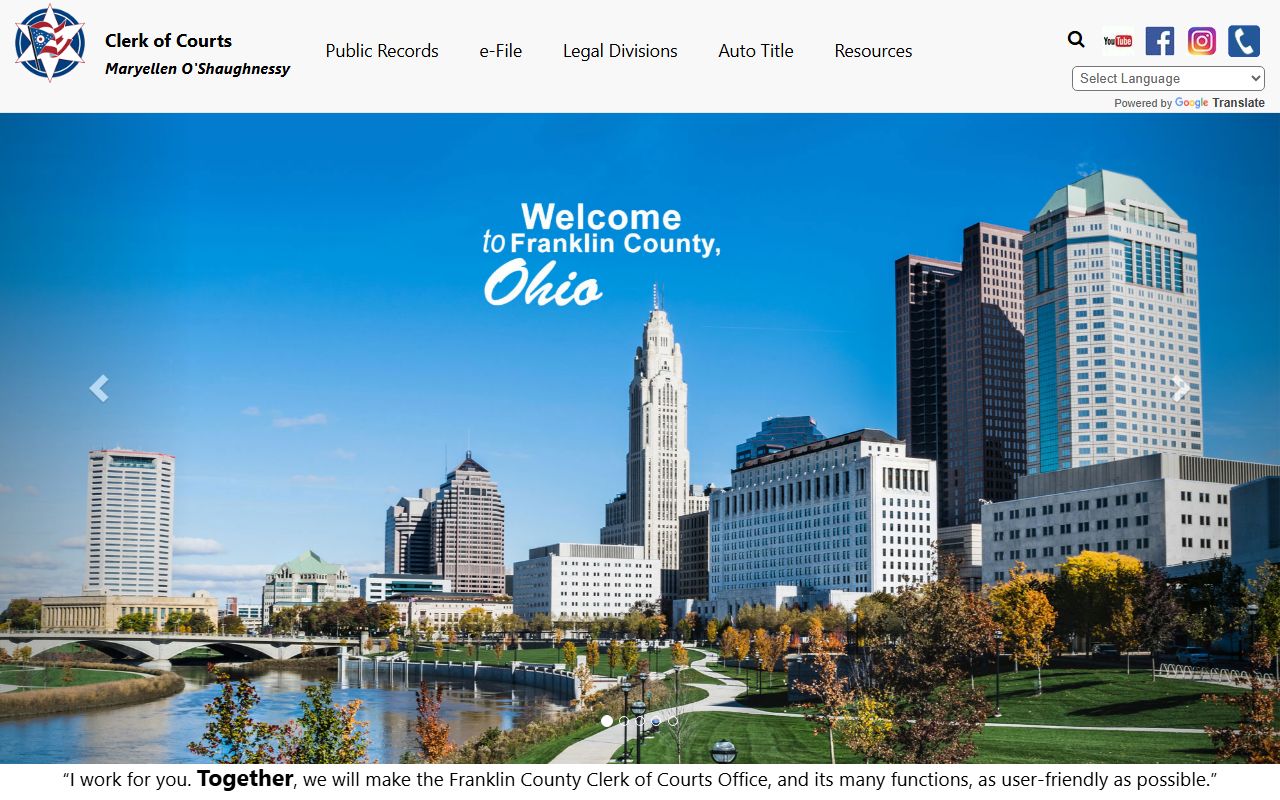
Franklin County processes thousands of domestic relations cases each year and offers online tools for searching case information.
Dissolution Of Marriage in Ohio
Ohio law draws a clear line between divorce and dissolution of marriage. A dissolution is the cooperative path. Both spouses must agree on every term before they file. They submit a joint petition along with a separation agreement that covers property, debt, support, and custody if kids are part of the case. Under Ohio Revised Code Section 3105.63, the court sets a hearing between 30 and 90 days after the petition is filed. Both spouses must show up and confirm under oath that they signed the agreement on their own free will.
Residency rules are simpler for dissolution than for divorce. At least one spouse must have lived in Ohio for six continuous months before filing. Under ORC Section 3105.03, divorce requires both six months in the state and 90 days in the filing county. Dissolution has no separate county residency rule. You can file in any county where either spouse lives.
Ohio is an equitable distribution state for property. Under ORC Section 3105.171, the court must sort out what is marital property and what is separate property. Marital property gets split equally unless equal division would not be fair. In a dissolution, the spouses decide the split themselves in their separation agreement. The court reviews it but usually accepts it as written. Child support uses the income shares model, which combines both parents' gross incomes and applies the Basic Child Support Schedule.
Ohio Dissolution Of Marriage Fees
Filing fees for a dissolution of marriage in Ohio vary by county. A dissolution without children costs around $300, while one with children runs about $350. Some counties charge a bit more or less. Each Clerk of Courts sets its own fee schedule within state rules. You pay the fee when you file the joint petition.
Copies of existing dissolution of marriage records also have fees. Most counties charge $0.10 per page for plain copies. Certified copies cost more, typically $1.00 to $2.00 per page plus a certification fee. Some counties accept credit cards. Others take only cash, checks, or money orders. In Hamilton County, you can get records from the Document Center at 1000 Main Street, Room 315, Cincinnati. In Summit County, the Clerk of Courts file room is at 205 S. High Street, basement level, Akron, OH 44308. Call ahead to confirm fees and payment methods since they can change.
Note: Filing fees are not the same as copy fees. Contact the Clerk of Courts in your county for the most current fee schedule before you file or request records.
Get Dissolution Of Marriage Copies
To get a copy of a dissolution of marriage decree in Ohio, contact the Clerk of Courts in the county where the case was filed. You can visit in person, send a written request by mail, or in some counties submit a request by email. You will need the names of both parties and the approximate date the dissolution was granted. A case number helps speed things up if you have one.
In-person requests are often handled the same day. Mail requests take longer, usually five to ten business days depending on the court's workload. Include a self-addressed stamped envelope and a check or money order for the copy fees. Certified copies carry the court seal and clerk signature. You need a certified copy for legal purposes like name changes, remarriage, or proving your marital status to a government agency. Plain copies work fine for personal reference.
The Montgomery County Clerk of Courts in Dayton provides their PRO System for online case searches. The office is at 41 N. Perry Street, Room 104, Dayton, OH 45422. You can call 937-225-4444 for records requests. The Mahoning County Clerk of Courts in Youngstown is at 120 Market Street. Call 330-740-2104 and ask for the Microfilm Department at 330-740-2303 to get older dissolution of marriage records sent to you by email as a PDF.
The Cuyahoga County Clerk of Courts provides a public access portal for searching dissolution of marriage and other court records at their online docket system.
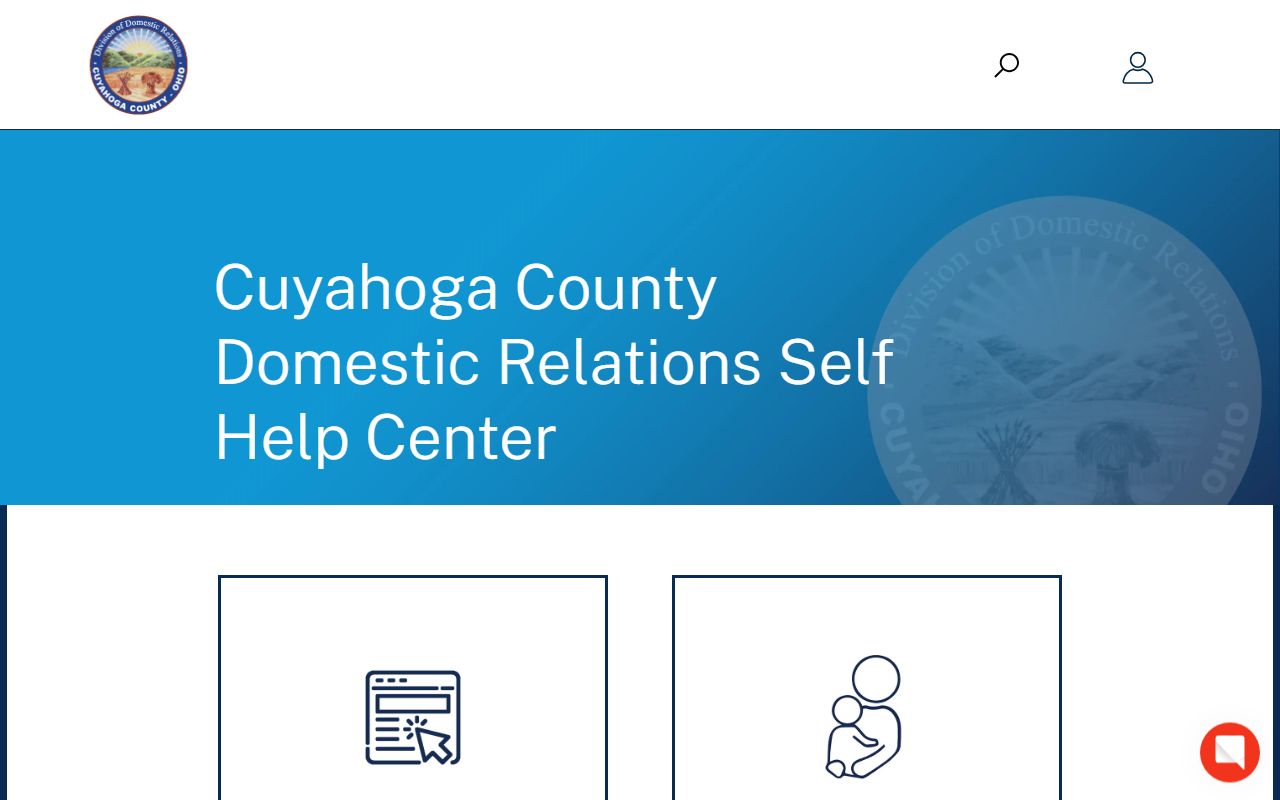
The Cuyahoga County system covers domestic relations cases and lets you search by name, case number, or date range.
Ohio Dissolution Of Marriage Laws
Ohio Revised Code Chapter 3105 covers divorce, legal separation, annulment, and dissolution of marriage. Sections 3105.63 through 3105.65 lay out the dissolution process. Both spouses file a joint petition with the court. They attach a separation agreement that handles everything: property, debts, support, and a parenting plan if they have children. The court holds a hearing 30 to 90 days later. If both spouses show up and say they agree, the judge grants the dissolution.
Dissolution of marriage is not the same as divorce in Ohio. A divorce can be filed by one spouse alone and uses fault or no-fault grounds listed in ORC Section 3105.01. There are 11 grounds for divorce, and incompatibility is the most used. But if one spouse denies incompatibility, a fault ground must be proven. Dissolution skips all of that. Both parties agree, file together, and the court approves their deal.
The Ohio State Bar Association provides resources about family law in Ohio. Every one of the 88 counties has a Domestic Relations Division within the Court of Common Pleas. Larger counties like Cuyahoga, Franklin, and Hamilton have well-staffed domestic relations courts with self-help centers and mediation services for people who do not have a lawyer. Spousal support is governed by ORC Section 3105.18, which lists 14 factors the court must weigh when deciding support amounts and duration.
Legal Help in Ohio
Several groups help with dissolution of marriage cases in Ohio. Legal Aid of Western Ohio covers many rural and mid-size counties and runs pro se divorce clinics. Call 888-534-2432 or visit their site at legalaidline.org to check if you qualify. The Ohio State Bar Association at ohiobar.com has a lawyer referral service that can connect you with a family law attorney in your area.
Many Ohio courthouses have self-help centers where staff can point you to the right forms and explain the filing steps. They cannot give legal advice, but they can help you understand what papers you need to file and where to file them. The Supreme Court of Ohio publishes standardized family law forms that every county court accepts. These include the joint petition for dissolution, separation agreements, financial disclosure affidavits, and parenting plans.
Are These Records Public in Ohio
Yes. Dissolution of marriage records in Ohio are public court records. Under the Ohio Public Records Act, Ohio Revised Code Section 149.43, anyone can request access to court records. You do not have to be a party to the case. You do not need to give a reason for your request. The Clerk of Courts must provide access to public records within a reasonable time.
Some parts of a dissolution file may be restricted. Financial source documents like tax returns and pay stubs are usually not public. Social security numbers and bank account numbers get redacted under Ohio Supreme Court Superintendence Rule 44. Custody evaluations may be sealed in some cases. But the final decree, the petition, and the separation agreement are almost always available to anyone who asks.
Browse Ohio Dissolution Of Marriage Records
Each of Ohio's 88 counties has its own Clerk of Courts and Court of Common Pleas that handles dissolution of marriage cases. Pick a county below to find local contact info and resources for dissolution records in that area.
Dissolution Of Marriage in Major Ohio Cities
City residents file dissolution of marriage cases at the Court of Common Pleas in their county. Pick a city below to find which county court handles dissolution records for that area.